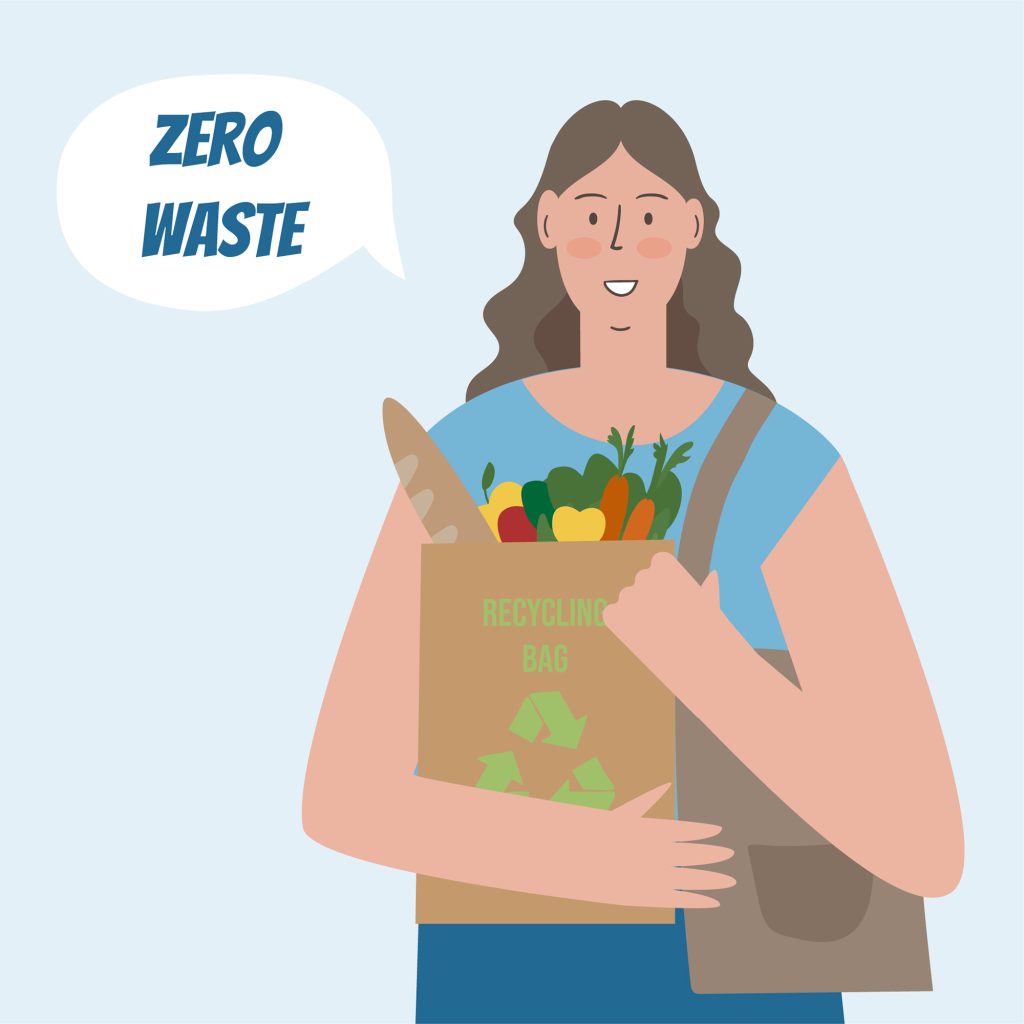
Zero waste is not about achieving perfection. It is about doing the best we can with the time, budget and shops we actually have. Here are the methods that make the biggest difference in an ordinary week.
1. Use a reusable water bottle
Bring your own reusable water bottle or filter to replace bottled water and the packaging that comes with it. It saves resources and money at the same time.
2. Switch to reusable bags
Choose reusable bags instead of single use plastic bags. It is worth remembering that a single plastic bag can take a great deal of water to produce, so a bag you keep for years beats a bag you take once.
3. Bring your own takeaway cup
Use your own coffee cup, or ask for a real cup if you are staying on site.
4. Avoid disposable plates
Use real plates and cutlery for meals, even informal ones. Reusable tableware is sturdier and produces no waste after the meal.
5. Do not throw food away
Store food properly, keep a list when shopping, and compost organic waste so it does not release methane in landfill.
6. Rethink your commute
Consider sharing your car, taking public transport, or simply travelling less often.
7. Eliminate takeaway packaging
Avoid harmful containers and choose more natural products or real food when you eat out.
8. Transform your bathroom
Make homemade products to avoid packaging and the water pollution caused by chemical residues. Our notes on nine zero waste cosmetics companies show how far this can go.
9. Buy from eco friendly businesses
Explore small shops that are committed to the environment, and support the ones that offer discounts when you bring your own bags or containers.
10. Buy secondhand
Check local secondhand markets and online marketplaces, such as Wallapop, Vinted, eBay and Vibbo, before buying anything new.
11. Transform your kitchen
If you cannot buy all your food without packaging, find an alternative for the items that are hardest to source loose. Refill shops and market stalls often cover the gaps.
12. Focus on resources, not landfill
Producing zero waste is more about the proper use of resources than about what ends up in landfill. It is always better to find something to reuse.
13. Raise awareness
We live in a consumer society, and it is important to ask for change if you do not like everything wrapped in plastic. Questions at the till and comments to shop managers move more than most people expect.
14. Repair before you replace
When something breaks, take it for repair or find another use for it. The beginner’s tutorial on living without creating garbage makes repair one of its first ten steps.
15. Share and borrow
Trade and borrow instead of buying. Tools, books and occasional use items are far better shared among neighbours than owned in every home.
Pick the three methods that are easiest where you live this week. Once they are automatic, return for three more.
For the full set of daily habits, read over a hundred easy strategies to prevent waste production, and for the products themselves see 50+ items to begin halting plastic pollution right now.